Egyptian cuisine is one of the world's oldest and most flavorful culinary traditions, with a history stretching back over 5,000 years. From the bustling streets of Cairo to the tranquil villages along the Nile, food in Egypt is more than sustenance — it is a celebration of culture, community, and centuries of tradition. Whether you are a curious first-time visitor or a seasoned foodie, this guide will take you on a delicious journey through the must-try dishes of Egypt and the best places to find them.
What makes Egyptian food so special is its incredible diversity. Over millennia, Egypt has been a crossroads of civilizations — Pharaonic, Greek, Roman, Arab, Ottoman, French, and British influences have all left their mark on the nation's palate. The result is a cuisine that is simultaneously ancient and modern, simple and sophisticated, street-level and fine-dining worthy. Every bite tells a story.
The National Dish: Koshary
No conversation about Egyptian food can begin anywhere else. Koshary is Egypt's beloved national dish — a hearty, comforting bowl of rice, lentils, macaroni, and chickpeas topped with crispy fried onions and drenched in tangy tomato sauce and garlic vinegar. It is vegetarian, incredibly filling, and absurdly affordable. A large bowl rarely costs more than a dollar.
The genius of koshary lies in its layers of texture and flavor. The softness of the rice and lentils contrasts with the bite of the pasta, while the crispy onions add crunch and the sauces bring heat, tang, and richness. Every koshary shop has its own secret recipe for the sauces, and Egyptians will passionately debate which shop in their neighborhood makes the best version.
Where to Try the Best Koshary
Abou Tarek in Downtown Cairo is the most famous koshary restaurant in Egypt. Founded in 1950, this multi-story restaurant serves thousands of bowls daily and has hosted celebrities from around the world. The atmosphere is lively, the portions are enormous, and the sauces are legendary.
Also try: Koshary El Tahrir (16 El Tahrir St) for a more local, less touristy experience, or Zooba in Zamalek for a modern, elevated take on the classic.
Breakfast of Champions: Ful Medames & Taameya
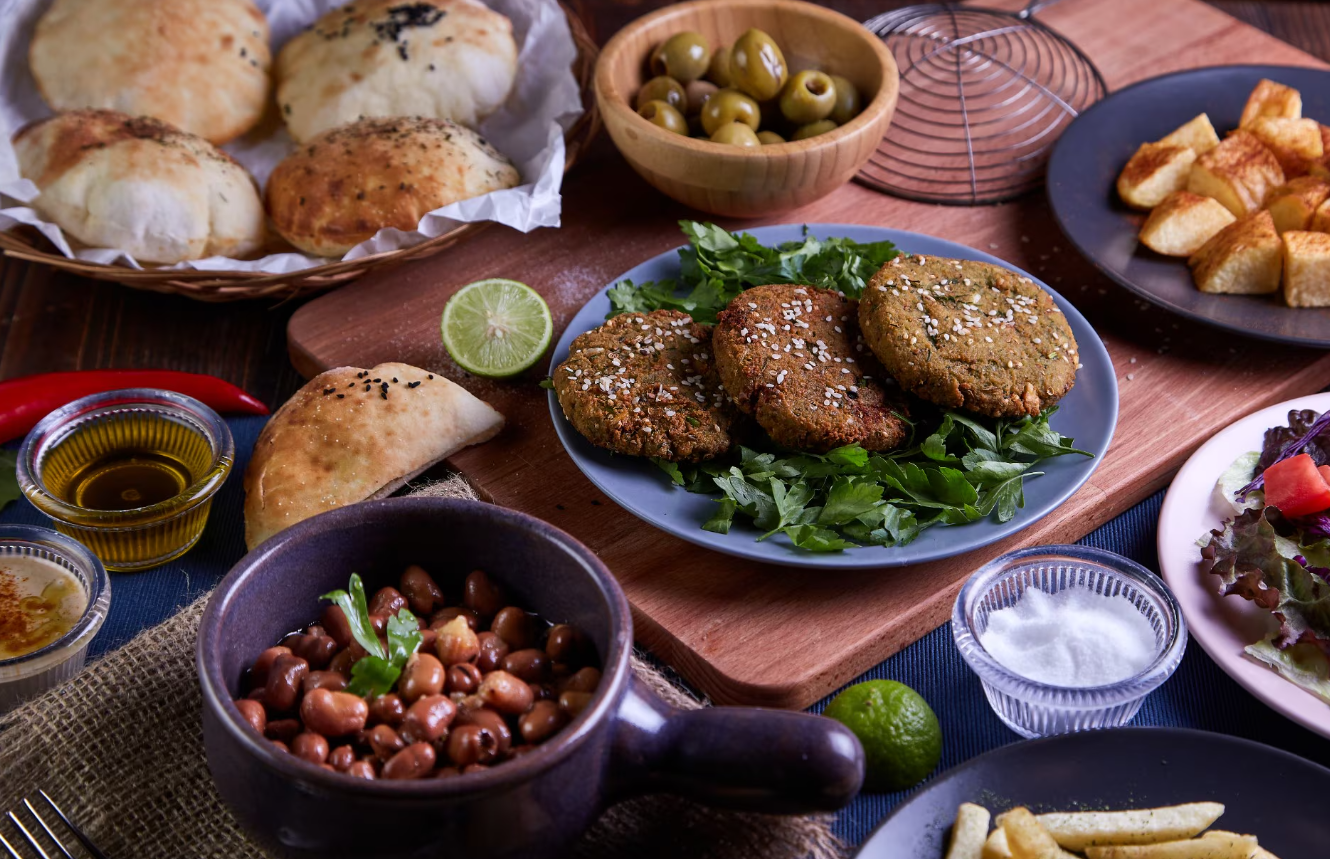
Egyptian breakfast is a serious affair, and ful medames is its undisputed king. These slow-cooked fava beans are simmered for hours until creamy and tender, then dressed with olive oil, lemon juice, garlic, and cumin. Served with warm baladi bread (a rustic whole wheat flatbread), it is the fuel that powers Cairo through its chaotic mornings.
Taameya — Egypt's answer to falafel — is the perfect companion. Unlike Lebanese falafel made with chickpeas, Egyptian taameya uses fava beans mixed with fresh herbs like parsley, cilantro, and dill. The result is a vibrant green, lighter, and more aromatic fritter that is crispy on the outside and fluffy within. Stuffed into pita bread with tahini, salad, and pickled vegetables, it is breakfast perfection.
Best Breakfast Spots
Felfela in Downtown Cairo has been serving traditional Egyptian breakfast since 1959. The ful here is cooked fresh every morning in enormous copper pots, and the taameya is fried to order.
Also try: Any street cart with a crowd of locals — the best ful and taameya are often found on the simplest corners. Look for carts with steaming copper pots and fresh bread being baked in clay ovens nearby.
Molokhia: The Soup of Kings
Molokhia is a dish that divides visitors — and that is precisely why you must try it. This deep green soup is made from the leaves of the jute plant, cooked with garlic, coriander, and chicken or rabbit broth until it reaches a silky, slightly viscous consistency. The flavor is intensely herbaceous, savory, and unlike anything else you have ever tasted.
In ancient Egypt, molokhia was considered so nutritious that it was forbidden to commoners and reserved for royalty. Today, it is a staple in every Egyptian home, served over rice with pieces of tender meat. The traditional way to eat it involves using baladi bread to scoop up the soup — no spoons needed.
Where to Find Authentic Molokhia
Sofra in Luxor serves molokhia in a beautiful courtyard setting that feels like dining in an Egyptian grandmother's home. Their version is made with free-range chicken and fresh-picked molokhia leaves.
Also try: El Prince (Kebdet El Prince) in Cairo for a more working-class, intensely flavored version that locals swear by.
Mahshi: Stuffed Vegetables
Mahshi is the art of stuffing vegetables with a fragrant mixture of rice, herbs, tomatoes, and sometimes minced meat. The most common varieties are stuffed vine leaves (wara' enab), stuffed zucchini (kousa), stuffed peppers, and stuffed cabbage rolls. Each vegetable brings its own character to the dish, and the slow-cooking process allows the flavors to meld into something truly special.
The secret to great mahshi lies in the stuffing mixture — the balance of rice, dill, parsley, mint, and tomato must be precise, and the cooking liquid (usually chicken or vegetable broth) must be seasoned perfectly. A well-made plate of mahshi is a labor of love that can take hours to prepare.
Best Mahshi in Egypt
Abou El Sid in Zamalek serves upscale Egyptian cuisine in a lavish oriental setting. Their mahshi platter is a colorful assortment of perfectly cooked stuffed vegetables that showcases the dish at its finest.
Also try: Local home-cooking restaurants in Islamic Cairo, where grandmothers have been perfecting their mahshi recipes for decades.
Seafood: Fresh from the Mediterranean and Red Sea
Egypt's two coastlines offer some of the freshest seafood in the region. On the Mediterranean, Alexandria is famous for its sayadeya — a fragrant rice and fish dish cooked with caramelized onions, tomatoes, and spices. The Red Sea coast, meanwhile, is paradise for grilled fish, shrimp tagines, and seafood platters that showcase the day's catch.
In Alexandria, the Corniche is lined with seafood restaurants where you can choose your fish from an ice display and have it grilled, fried, or baked to your preference. In Hurghada and Sharm El-Sheikh, beachfront restaurants serve lobster, prawns, and snapper caught that morning.
Top Seafood Destinations
Fares Seafood at Hurghada Marina serves the freshest catch grilled to perfection. Their shrimp tagine and sayadeya fish are local favorites.
In Alexandria: The Greek Club terrace overlooking the Mediterranean offers classic Greek-Egyptian seafood with breathtaking views. Try the grilled octopus and sea bass.
Sweet Endings: Egyptian Desserts
No Egyptian meal is complete without dessert, and the options are as diverse as they are delicious. Om Ali — a warm bread pudding made with puff pastry, milk, nuts, and coconut — is the most beloved. Basbousa, a semolina cake soaked in syrup, is found in every bakery. Konafa, made from shredded phyllo dough filled with cream or nuts, is a Ramadan staple that has become popular year-round.
For something truly special, seek out El Abd in Downtown Cairo, a legendary patisserie that has been serving traditional Egyptian sweets since 1936. Their basbousa and konafa are considered the best in the city, and the shop itself is a time capsule of old Cairo elegance.
Pro Foodie Tips
1. Eat where the locals eat — crowded restaurants are usually crowded for a reason.
2. Don't be afraid of street food — Egypt's best flavors are often found on the simplest carts.
3. Learn a few Arabic food words — "shukran" (thank you) and "zaki" (delicious) go a long way.
4. Pace yourself — Egyptian portions are generous, and you will want to try everything.
5. Stay connected with a Yesim eSIM to find hidden food gems and read reviews on the go.
Final Thoughts
Egyptian cuisine is a journey through history, culture, and flavor that no visitor should miss. From the humblest street cart to the most elegant restaurant, the food here is prepared with pride, served with generosity, and enjoyed with gusto. Every meal is an opportunity to connect with Egypt's past and present — to taste the same dishes that pharaohs, merchants, and farmers have enjoyed for thousands of years.
So come hungry, keep an open mind, and prepare to fall in love with one of the world's most underrated culinary traditions. Your taste buds will thank you.